


As we anticipate a week of preparations to honor our Blessed Mother Mary as the Immaculate Conception and Our Lady of Guadalupe, Franciscan Friar Fr. Paul Gallagher reflects on the Gospel readings for the Second Sunday of Advent. When you think about Advent being a time of preparation, what are your memories of times of preparation in your own life?
The content is edited by Franciscan Sister of Christian Charity Sister Anne Marie Lom and Joe Thiel. The excerpts from the Sunday readings are prepared by Joe Thiel. To read or download the complete pdf with excerpts for your prayer, please click here: Franciscan Gospel Reflection December 7 2025. Excerpts are from the Lectionary for Mass for Use in the Dioceses of the United States of America, second typical edition © 2001, 1998, 1997, 1986, 1970 Confraternity of Christian Doctrine, Inc., Washington, DC. Used with permission. All rights reserved. No portion of this text may be reproduced by any means without permission in writing from the copyright owner. Photos: Immaculate Conception, West Bend, Wisconsin, Sacred Hearts of Jesus and Mary, Sun Prairie, Wisconsin. Epiphany of the Lord
Matthew 3:1-12
In those days John the Baptist appeared, preaching in the desert of Judea and saying, “Repent, for the kingdom of heaven is at hand!” It was of him that the prophet Isaiah had spoken when he said: “A voice of one crying out in the desert, ‘Prepare the way of the Lord, make straight his paths.'” John wore clothing made of camel’s hair and had a leather belt around his waist. His food was locusts and wild honey. At that time Jerusalem, all Judea, and the whole region around the Jordan were going out to him and were being baptized by him in the Jordan River as they acknowledged their sins.
When he saw many of the Pharisees and Sadducees coming to his baptism, he said to them, “You brood of vipers! Who warned you to flee from the coming wrath? Produce good fruit as evidence of your repentance. And do not presume to say to yourselves, ‘We have Abraham as our father.’ For I tell you, God can raise up children to Abraham from these stones. Even now the ax lies at the root of the trees. Therefore every tree that does not bear good fruit will be cut down and thrown into the fire.

I am baptizing you with water, for repentance, but the one who is coming after me is mightier than I. I am not worthy to carry his sandals. He will baptize you with the Holy Spirit and fire. His winnowing fan is in his hand. He will clear his threshing floor and gather his wheat into his barn, but the chaff he will burn with unquenchable fire.”
Background:
This is the second week of the new church year and the second Sunday of Advent. Advent is preparation for the arrival of the reign of God, which begins with God coming into the world through the birth of Jesus, a singularly important event. Times of preparation are both significant and familiar parts of our daily and religious life. Most of us are familiar with the times spent preparing for an important test or even preparing for an important meal. Religiously, many take time to prepare for prayer, or even ponder “reflection questions” before Sunday Mass. In our religious tradition, we are also familiar with the importance of times of preparation. The forty years that the Jews spent in the desert, the time to build the temple, and the forty days that Jesus spent in the desert before his public ministry all point to the importance of and need for a time of preparation.
In today’s Gospel, John the Baptist urges people to make time for preparation before the arrival of the longed-for reign of God. Matthew focuses on John as a prophet, a person in the line of prophets of the Hebrew people who tried to help the people see God working in their midst. Thus, John dresses and acts like a traditional prophet, wearing camel hair with a leather belt and eating locusts and wild honey. He is like Samson, Samuel, or Elijah who also spoke of resistance to injustice and looked for social reform.
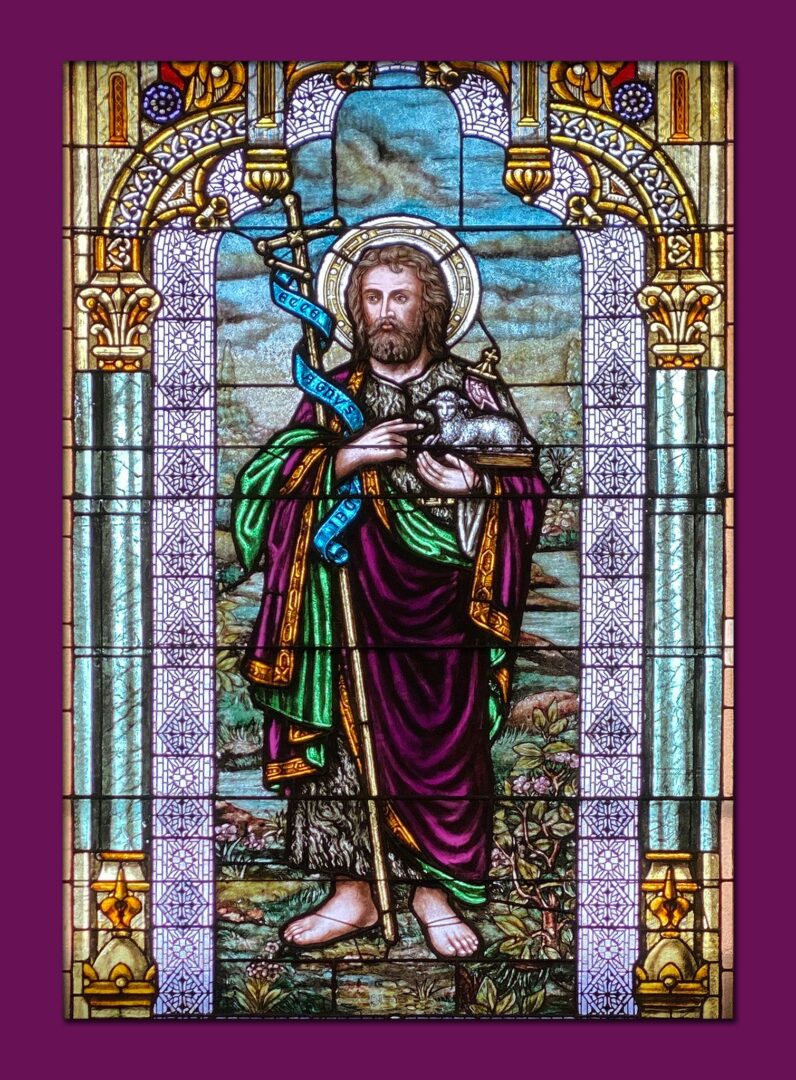
John understands himself preparing for one whom he is not worthy to even carry his sandals, and one who will clear the threshing floor and gather the wheat into his barn. He also is asking the people to prepare themselves for the arrival of God’s reign and the arrival of the Messiah. The repentance he seeks is more than personal, but instead is a social transformation that leads to just relationships being lived throughout the society. In order to emphasize the connection between repentance and changing one’s life, John calls the Pharisees and Sadducees a “brood of vipers,” understood as offspring of snakes. The Pharisees drew importance from maintaining their ancestral heritage, by faithfully keeping religious traditions. To call them offspring of snakes suggests that their way of life is largely a “show,” and challenges them to show “good fruit as evidence of your repentance.”
At that time there was great unrest with authority, both civil and religious. Both Rome and the priestly aristocracy of Jerusalem exploited the common person by not confronting the systems that kept most people in need of even the basic necessities for life. Ancestral property was confiscated, and taxes were unaffordably high. The social climate was one of unrest and desire for change. Many gave in to grumbling and complaining. Others looked for a Messiah, someone from the outside, who would bring about the changes for which they longed. Instead of giving in to grumbling and complaining, John preached repentance in order to prepare for the coming of the Messiah. But John looked for a Messiah who would come with power to change the world order of the day. “I am baptizing you with water, for repentance, but the one who is coming after me is mightier than I.” (Matthew 3:11)
The Gospel text that the Church has chosen for this second Sunday of Advent is a challenge to us in this time of Advent. This time of preparation is not just for the celebration of the birth of Jesus, but also for commitment to living in the Kingdom of God that Jesus’ birth inaugurated. It calls the church to look beyond individual transformation, to changes in society and our institutions that are needed, and ask what part we might be asked to play in the reality in which each of us lives.
Reflection Questions:
- When you think about Advent being a time of preparation, what are your memories of times of preparation in your own life?
- What were some of the feelings that arose within you during such periods?
- How have times of preparation helped you to be the person you are today? How have those experiences helped you in your spiritual journey?
- How does today’s Gospel fit with the way you have been thinking about the coming of Christmas?
- What comes to mind as you hear Matthew describing John as being in the desert, eating locusts and wild honey, and preaching repentance?
- What are some of the things that arise in you as you hear John’s message in today’s Gospel?
- By coming out to be baptized, people were publicly admitting their faults. Has there ever been a time when you were willing or even needed to admit your failures?
- Can you take some time to talk with God about your desire to use this time before Christmas as a time for preparation for the arrival of God and God’s reign, or some other hope for God’s lived presence in your life or in greater society?
The post Second Sunday of Advent 2025 Franciscan Gospel Reflection appeared first on Franciscan Sisters.